Function of the Air Conditioning filter
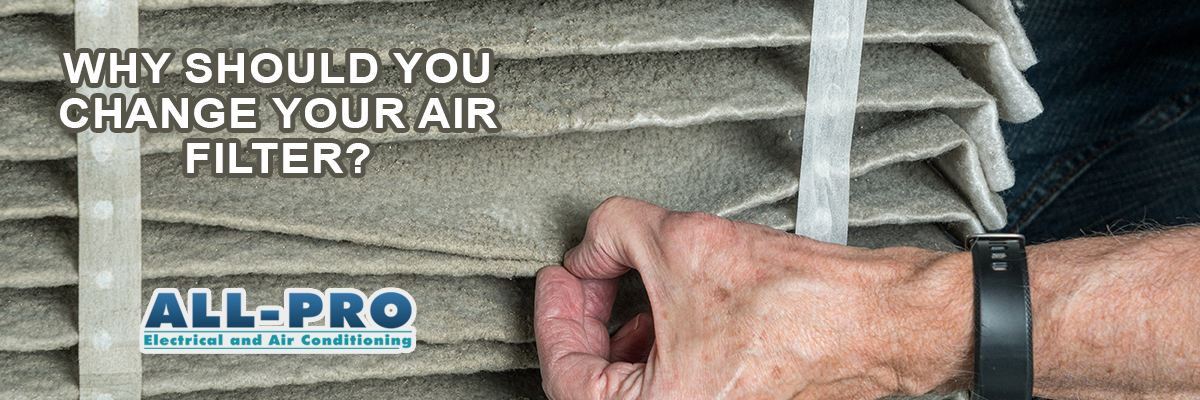
The function of the Air Conditioning filter is to protect the inside of the unit from dust and other contaminants that are found in the air, including hairs and pet dander.
As the air passes through the filter, the dust and dirt gets caught, it stops it from entering the mechanical parts of the system and causing unnecessary breakdowns.
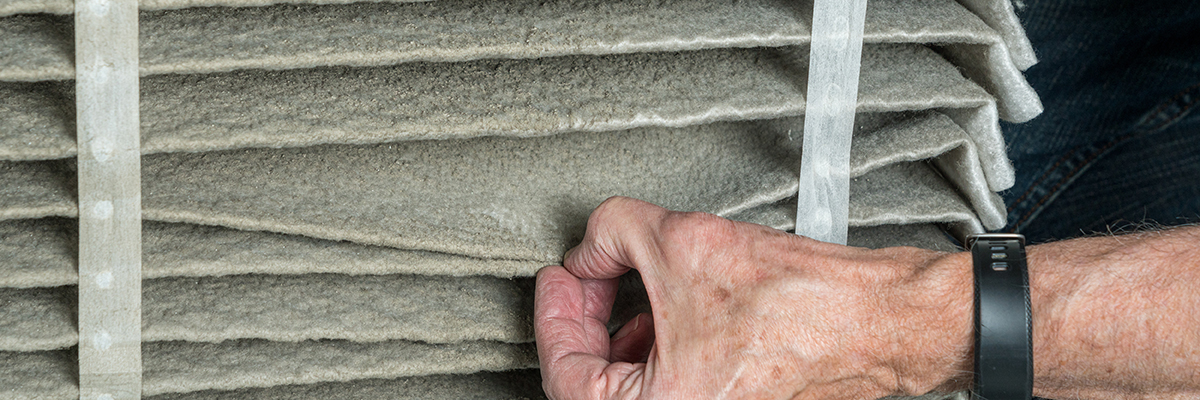
An air filter accumulates layers of dirt, dust and dander that restricts the air flow, this puts a strain on your system, this causes malfunctions and uses up more energy. Restricted airflow can cause the coil to freeze up your outdoor unit.
Without a clean filter, the system will draw in and return the same dirty air into your indoor environment, contributing to health problems, and costly repairs.
FACT - 80% of breakdowns are the result of dirty filters.
Which type of filter is best
Expensive filters with tight filtration are more efficient at trapping particles but this restricts the airflow even more. So much so that they cause static pressure and mechanical
Home improvement and renovation shows have never been more popular and there’s no shortage of how-to information for motivated homeowners on YouTube. Of course, doing certain home improvement jobs yourself, or with a handy relative or neighbor, can save you a lot of money, and the sense of accomplishment is, well, priceless, but if your DIY project involves electrical work, you really should leave it to the professional…
Doing your own electrical work can put you, your family, and your home at risk. Leaving electrical repairs to trained electrical contractors is crucial for several reasons:
When it comes to repairing, installing, or maintaining today’s high-tech electrical and HVAC equipment, those low-ball estimates will often backfire. Low costs are simply not consistent with high-quality work or premium products.
At All-Pro Electrical and Air Conditioning, we are state licensed and insured, with an ongoing training program for all our technicians, and that doesn’t come cheap, but you can be sure that your job will get done right - the first time.
Hiring an unlicensed contractor may seem like the cheap way out, but repairs and installations performed by unlicensed contractors void warranties and hiring an unlicensed contractor can result in a civil penalty of up to $5,000 – plus court costs!
Inexpensive tune up specials, like any other “too good to be true” offer, are a tactic that is commonly used by unscrupulous contractors to get their foot in your door, so they can strong arm you into buying unnecessary parts and services.
Having saved a few dollars in the short run will
High-quality air filters cost more, but they can easily pay for themselves by improving indoor air quality (IAQ), reducing the likelihood of expensive repairs, and improving your system’s efficiency and performance. In fact, it’s estimated that a clean, high-quality air filter can reduce your air conditioner’s energy consumption by as much as 16 percent!
The basic function of any air filter is to trap dust, pollen, mold spores, and other airborne particles in its fibers. As filters age and deteriorate, they lose the ability to trap new particles, and they can release those same fibers and other debris into your system.
Higher-quality air filters will trap more particles, this is particularly important if you suffer from allergies or a respiratory condition like asthma or COPD, but a higher MERV rating is no substitute for a properly fitting filter that is changed regularly, and you can overdo it. A higher MERV rating means less airflow, which can damage your HVAC system.
When any air filter becomes clogged, air will bypass the filter
Environmental Protection Agency (EPA) studies suggest that pollutant levels inside your home can be 2 to 5 times higher than outdoor levels and common indoor pollutants, including biological contaminants (e.g., bacteria, viruses, animal dander, cat saliva, dust mites, cockroaches, and pollen), volatile organic compounds (VOCs), carbon monoxide (CO), radon (RN), and secondhand smoke, have all been linked to negative health outcomes from allergies and asthma to lung cancer and heart disease.
What’s more, the EPA estimates that Americans spend as much as 90% of their time indoors, making Indoor Air Quality (IAQ) an area of great concern across the country. In fact, IAQ is now the second highest HVAC priority for homeowners, behind energy efficiency.
Many homeowners have tried to mitigate indoor air pollution with portable filtration systems, but these measures cannot provide the health and comfort benefits of a whole-home solutions.
If you’re concerned about the air inside your home, ask yourself…
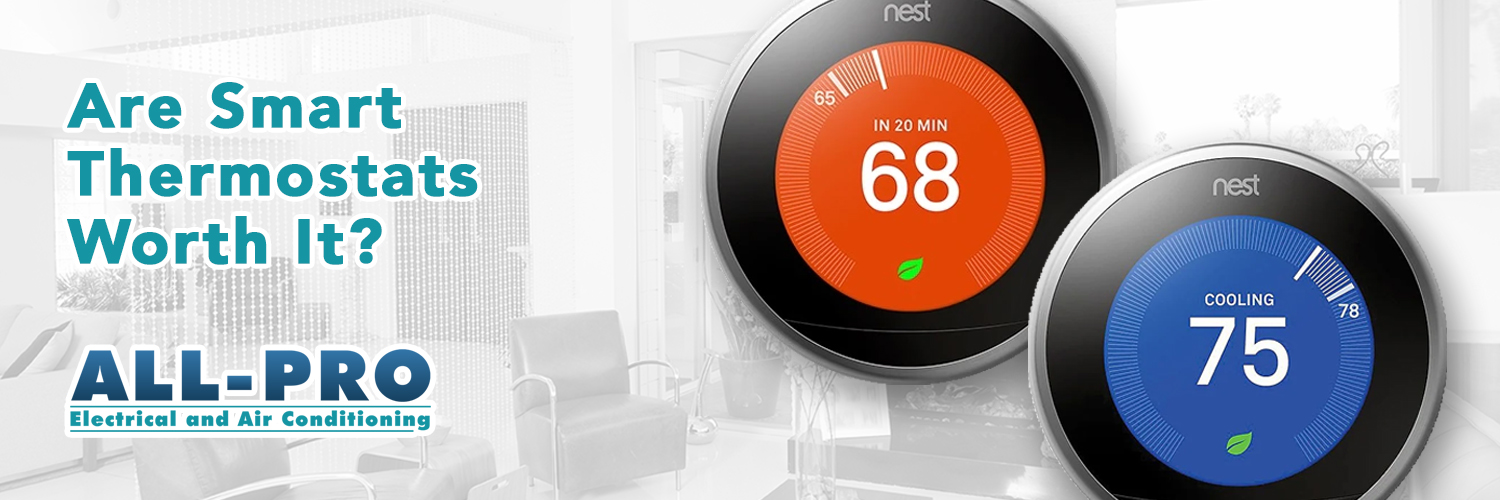
Programable thermostats (thermostats that can adjust the temperature based on a pre-set schedule), have been around, in one way or another, since 1906. So why is everyone, “all of a sudden” (for the past 10 years or so), talking about “smart” thermostats, and what’s so smart about them anyway?!
For a thermostat to be considered “smart”, it just has to be Wi-Fi enabled. The most basic models just allow you to remotely adjust the temperature with a smartphone app. This is great because it allows you to set the thermostat to your desired temperature before leaving work after a 12-hour shift or from the tarmac after a weeklong vacation, while maintaining an energy-saving temperature while you’re away.
The really smart ones “learn” your preferences and routine (mostly through motion sensors) and automatically adjust to an energy-saving temperature when you’re asleep or away. Higher end models use features like geofencing to achieve your desired temperature by the time you get home.
In summary, smart thermostats use motion sensors and geofencing to figure out when nobody is home, and automatically go into energy-saving mode when your house
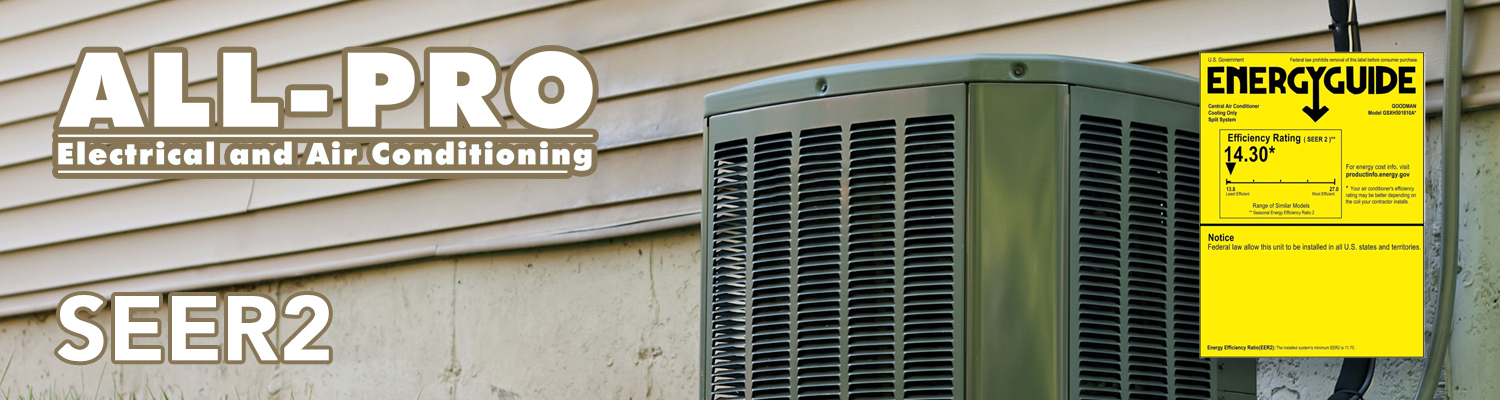
SEER, which stands for Seasonal Energy Efficiency Ratio, is the ratio of cooling output (the BTUs) of an air conditioner or heat pump over the course of a typical cooling season, divided by the electrical input (the watt hours) required to run the unit in that same period.
Much like your vehicle’s MPG rating, a higher SEER rating means a more efficient air conditioning system, but just like MPG ratings, SEER ratings are affected by real-world conditions (you’re probably not getting the same mileage that was printed on the window sticker).
The Department of Energy (DOE) has enforced minimum SEER requirements since 1992, but previous testing methods did not accurately reflect real-world conditions, like poorly designed ductwork.
On January 1, 2023, new testing procedures known as SEER2 went into effect. These new SEER2 standards more accurately reflect real-world conditions, and they demand a lower energy efficiency rating so, in essence, you now have to get a better grade on a harder test.
What does this mean in practice?
The DOE
But not all HVAC contractors are created equal…
At All-Pro Electrical and Air Conditioning, our technicians are cross-trained in electrical and HVAC so, in addition to all the services you expect from a traditional HVAC contract, our technicians can repair or install ceiling and attic fans, smoke and carbon monoxide detectors, indoor and outdoor lighting, circuit breakers, GFCI outlets, and much, much more – they can even install flat-screen TVs.
And because we believe in doing things right the first time, our trucks are fully stocked and ready to go so we can handle almost any electrical or air conditioning service in just one visit.
Best of all, our Electrical and HVAC Maintenance Plan members get:
So, if you live in Broward or Palm
Small tubes carry refrigerant from the compressor to the indoor units, so you only have to drill a small hole behind each air handler.
The inverter-driven compressor makes mini-split systems ultra energy-efficient, which saves you money, the indoor air handlers have a sleek, non-invasive design that goes with any decor, and they are much quieter and safer than window units, making them the perfect solution for:
Everyone in your family is affected by the quality of the air inside your home.
There are many illnesses, in addition to the Covid-19 virus which is believed to be spread by droplets in the air, that can be alleviated or even prevented with cleaner air.
Cleaner air means less severe symptoms if you suffer from allergies, asthma, and myriad other illnesses. According to the EPA, indoor air is often five times more polluted than outdoor air, and opening windows for ventilation is not always an option, so let's consider a more practical solution...
Your Air Conditioning system plays a critical role in keeping the conditions inside your home just right. It's here, at the source, that we are able to treat the air that circulates throughout our homes. Conventional filters are effective against particulates like dust. It's the mold, bacteria, viruses, and allergens spread around the home that often get overlooked.
A practical solution - with proven benefits. Here's How it works...
For over a century, scientists have known that UVC light has a devastating effect on microbial life. It disrupts the DNA of microorganisms, thus
When purchasing a big-ticket item, like a new Air Conditioning system, it’s a good idea to get a few quotes, but make sure you’re comparing “apples to apples” and not just going with the lowest bidder. In most cases, you get what you pay for!
Lowering the bottom-line by cutting corners is easy (dishonest, but easy). It's important to know what’s included (and what isn’t) and who you’re trusting with this big investment.
All-Pro does not provide ballpark “guesstimates”, we take the time to come to your home or business, consider your requirements, and provide you with an honest, professional estimate.
Keep in mind that, you’re not just buying a piece of equipment, you’re choosing the best company to complete the installation, correctly (and safely) - the first time.
As your air conditioning runs off electricity, it shouldn't come as a surprise that it should be installed by a trained professional, most HVAC technicians are not cross-trained in electrics so they can’t diagnose and repair electrical issues.
An inexperienced installer can be a disaster (literally) and an unlicensed contractor will void the manufacturer’s warranty. Your peace of mind is just
Are you in the process of gathering quotes? If so, be sure to compare 'apples with apples'
A new, more efficient air conditioning system is quite an investment, All-Pro does not provide 'ballpark guesstimates' we take the time to come to your home or business, assess your requirements and provide you with an honest, professional estimate.
You may be tempted by the lowest bid, but it's not always good to just focus on the bottom line. In most cases you get what you pay for.
Anyone can make something cheaper by cutting corners and pricing for less. So, it's important to know what is and is not included with any home comfort system.
As your air conditioning runs off electric it shouldn't be any surprise that your new system should be installed by a qualified licensed company, not all technicians are cross trained in electrics and are capable of diagnosing and repairing electrical faults.
An amateur job can be disastrous and void the manufacturers warranty, it's not worth the few dollars saved hiring a professional.
Consider when purchasing a new air conditioning system that you are
We rarely think about the quality of the air inside our homes, but Environmental Protection Agency (EPA) studies suggest that indoor levels of pollutants may be two to five times — and occasionally more than 100 times — higher than outdoor levels!
Common indoor pollutants like biological contaminants (e.g., bacteria, viruses, animal dander, cat saliva, dust mites, cockroaches, and pollen), volatile organic compounds (VOCs), carbon monoxide (CO), radon (RN), indoor particulate matter; and secondhand smoke have been linked to negative health outcomes ranging from allergies and asthma to lung cancer and heart disease.
The good news is that, when it comes to the quality of the air inside your home, you can take matters into your own hands. For that, the EPA suggests three basic strategies:
Source Control
Some sources of pollution, like asbestos, should just be eliminated. Others, like gas emanating from a gas stove, can be adjusted to reduce emissions.
Improved Ventilation
Increasing the amount of outdoor air inside your home by opening windows and doors, operating attic fans, or running a window unit with the
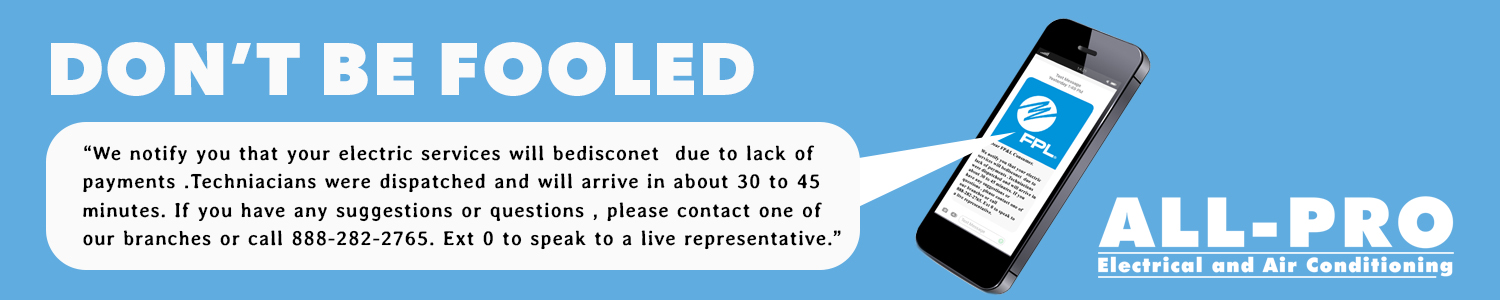
Most scams are quite obvious, in fact, they’re obvious by design. Those typo-laden “Nigerian Prince” scams (to cite the classic example) are meant to weed out less-trusting individuals who won’t ultimately send the requested cash. Some scams are a little more sophisticated…
You’ve probably received emails that look like they’re coming from Amazon or Venmo or Bank of America – any company that enough people have or have had an account with so that some percentage of email recipients will be tempted to click on a link that downloads a virus or takes you to a page where you’ll be asked to enter your username and password for that company.
If you’re trying to scam consumers in Broward or Palm Beach, or any number of places in the great state of Florida – there’s a pretty good chance those consumers are going to have an FPL account. That’s why so many scammers pretend to be affiliated with FPL (and other utilities in other areas).
According to FPL, some of the most common scams include:
Okay, he was probably (definitely) talking about something else but, when it comes to your Air Conditioning and Heating system - an ounce of prevention is definitely worth a pound of cure.
If you live in South Florida, there’s a really good chance your Air Conditioning system runs non-stop all year, and it really earns it’s keep during our scorching Florida summers. If you want to keep your AC from failing in the summer – schedule a preventive maintenance visit in the spring.
Regular maintenance extends the life of your system, so you save money in the long run and it keeps it running at peak efficiency, so your energy bills are lower (and your home is less humid) in the short run. It also helps you avoid about 85% of the issues that your neighbors who don’t maintain their systems call us for. Best of all, the chance of your system breaking down at the most inconvenient time (which is also when AC companies are busiest) are greatly reduced.
And, if you don’t think your Air Conditioning system needs regular maintenance because it’s
Don't you just love a cool home here in Florida. We often take for granted the air conditioning system that we set and forget, do you remember the last time you scheduled a service repair for your air conditioner? have you previously waited until it stopped properly cooling your home? or it completely breaking down? Now is the time to show it some TLC
Trust All-Pro's Preventative Maintenance Plans
What's not to Love!
Preventative maintenance can prolong the life of your air conditioning system, avoid costly system failures, keep your system running efficiently and of course improve the air that you and your family breathe.
Electrical and Air Conditioning Installations & Repairs With an All-Pro Air Conditioning Maintenance Plan
This offer is not valid with any other offers or promotions and cannot be combined with any other discounts
Enjoy 10% Off any Indoor or Outdoor Lighting Installation or Repair, 10% Off any Smart Thermostat, or 10% off any Air Purification System until January 31, 2022.*
*These offers may not be combined with any other offer or promotion.