Image
Image
Image
Image

Why Isn’t My Air Conditioner Keeping Up With the Heat?

Why Isn’t My Air Conditioner Keeping Up With the Heat?

HVAC Tips During Florida’s Extreme Summer Temperatures

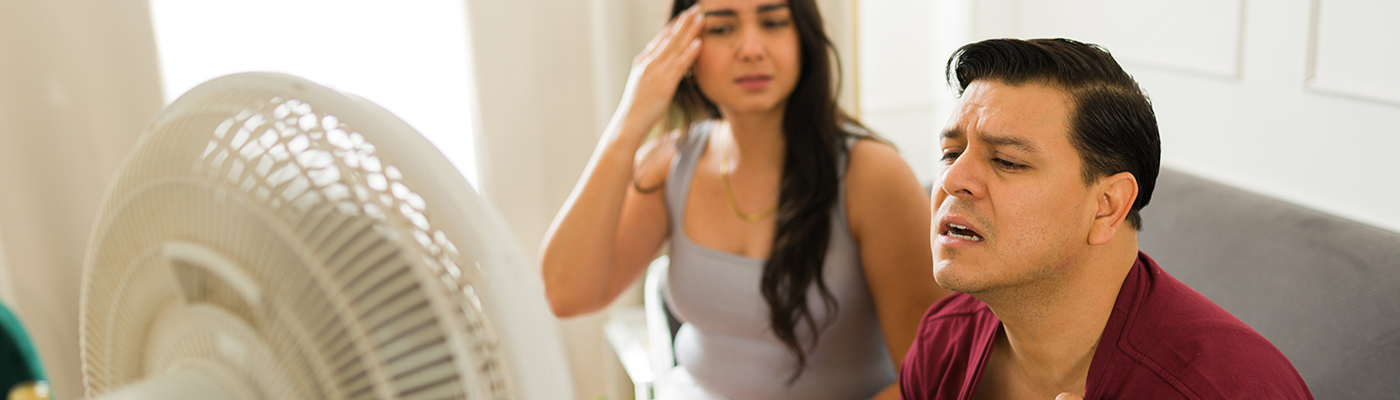
Florida summers are no joke, and neither is the heat your air conditioning system has to battle. Most of the time, we don’t give our A/C units much thought. They quietly keep us comfortable, year-round. But when a heat wave hits and temperatures get close to 100 degrees, even a well-functioning system can seem like it’s falling behind.

If your A/C struggles to keep your home at the temperature you’ve set, it might not be a mechanical issue. In many cases, the challenge lies in the structure of your home. Your system may simply not be able to offset the intense heat load caused by extreme weather, especially in older homes not designed for today’s record highs.

We’ve had a flood of calls from Boca Raton homeowners concerned that their A/C can’t keep up. But here’s the reality: cooling systems are not engineered for these historically high heat indexes. If your thermostat is set to 75 but the house sits at 78, that’s not necessarily a sign of failure, it’s often just a reflection of how brutal the weather outside really is.

Why Is This Happening?

When temperatures spike, they tend to reveal weak spots in your home that might not be obvious during milder conditions. Insufficient attic insulation, older windows, worn-out weather stripping, and even the number of people (and pets) in your home can all add to the indoor heat load.
Your air conditioner is designed to keep the indoor air

Read more

Prepare for the next storm

Storms give us very little time to prepare. During the panic phase, just before the downpour begins, you may be focused on stocking up food, making sure you have candles or preparing to go to a storm shelter.

In the midst of all this, don't forget you have important equipment to protect. Here are 5 tips for keeping your air conditioner safe during a storm.

Turn off your AC

Electrical surges are common when lightning hits and you don't want your air conditioner's electrical components destroyed (and you certainly don't want a fire to start!)

Make sure your AC is off before the storm hits. If the weather is particularly hot, you can run it until the sky darkens (lightning might be flashing before the rains come so don't wait that long). Then make sure you remember to turn it off.

Cover it

Exposed components can be damaged from flying debris. Use a tarp, or board to cover your unit and protect it from anything that the wind throws at it. Protect your refrigerant piping from damage since leaking refrigerant is hazardous to both you and the environment.

Make sure your cover is secure so it doesn't turn into debris itself to cause damage elsewhere. And after the storm passes, remove the covering before starting up your unit.

Clean up your yard

Before the storm hits, pack away outdoor furniture, toys, your barbecue pit and anything else that's not tied down.

Clean up branches that might have fallen and inspect

Read more